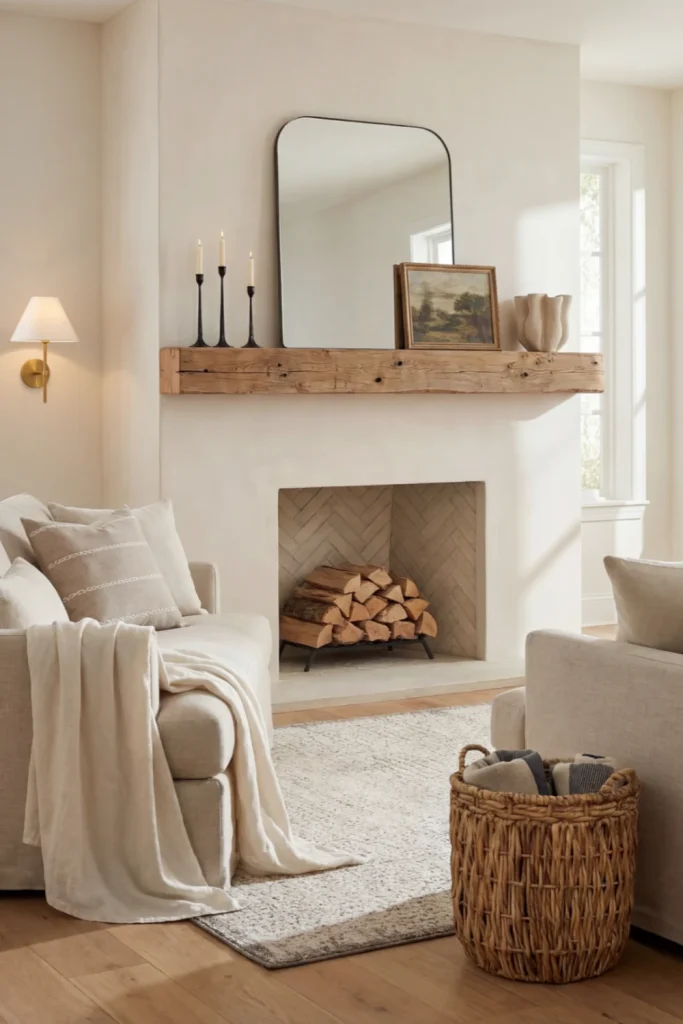
Shelves are useful because they hold a lot, but that is also why they can become visually loud. When every object is competing for attention, the room loses the calm feeling you were trying to create.
A reset does not mean removing all the personality. It means giving your favorite pieces enough space to be noticed.
Clear the shelves completely
Start with a clean surface. Put every object on the floor or a nearby table so you can see the full collection. This makes it easier to notice duplicates, pieces that are too small to read at a distance, and objects that belong somewhere else.
Build a quiet base
Books, baskets, boxes, or a few larger ceramics create the base of the display. Choose a couple of pieces that have visual weight, then leave open space around them. Empty space is not wasted space; it is what lets the rest of the arrangement breathe.
Work in groups of three
Odd-numbered groupings usually feel more relaxed than perfectly paired objects. Try one tall item, one low item, and one piece with a different texture. A framed photograph can lean behind a small bowl. A plant can soften a stack of books.
Style for the room you have, not the shelf you wish you had.
Repeat one note
Choose one color or material to repeat across the shelves. It might be warm wood, a muted green, aged brass, or a small thread of terracotta. Repetition makes a collection feel intentional even when the objects were gathered over time.
Keep the useful things useful
Not everything needs to be decorative. A basket for remotes, a box for cables, or a row of books you actually read can make the display more personal. The most convincing shelves show a life, not a showroom.
Remove one object from each shelf, step back, and look again. If the display feels lighter without feeling empty, stop there.
Let it change
A shelf does not have to be finished forever. Rotate a print, move a plant toward the light, or put away an object that no longer feels like you. A room gains character when it is allowed to evolve.