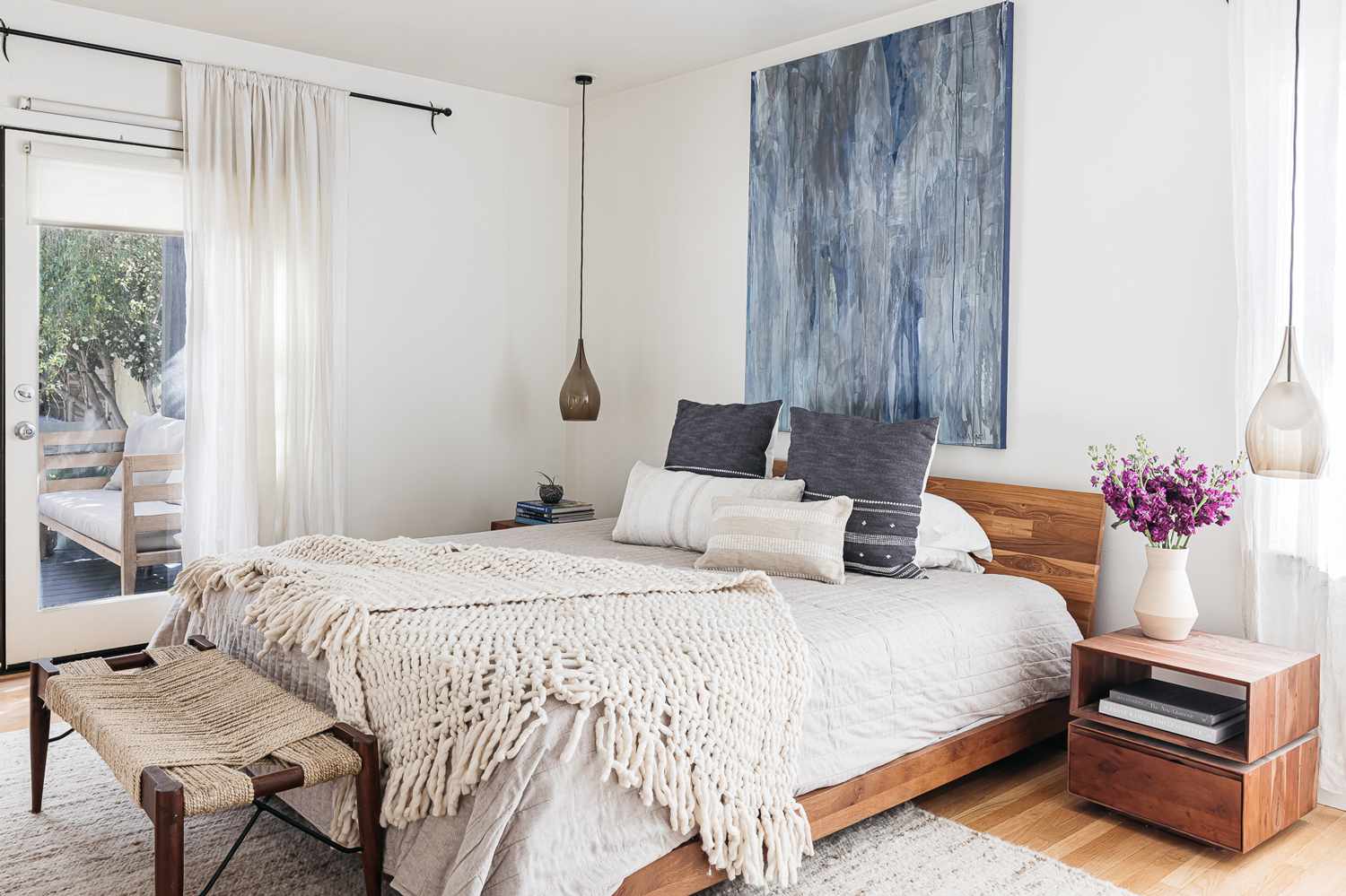
There is a difference between a bedroom that looks finished and one that feels like a place you want to return to. The second one usually has less to do with matching furniture and more to do with the conversation between soft things: a rumpled cover, a low lamp, a curtain that catches the afternoon.
When a room feels a little flat, start with the layers you can feel before you add anything decorative. The goal is not to create a perfect hotel room. It is to give the eye a few gentle places to land.
1. Choose one quiet base
Begin with a base that gives the rest of the room room to breathe. Warm white, oat, mushroom, dusty olive, or a soft clay tone can all work. If your walls or large furniture are already busy, let your bedding do less. A calm base makes texture look intentional instead of noisy.
In practice, this might mean a solid duvet cover with a small stripe on the shams, or a plain quilt folded at the foot of the bed. Repetition matters more than a perfect color match. Repeat one tone at least twice so the room feels connected.
2. Layer texture, not just color
Texture is what makes a neutral bedroom feel alive. Pair something nubby with something smooth, something matte with something that catches the light. Linen, cotton, wool, washed velvet, cane, and wood each bring a different kind of quiet movement.
Think of a room as a small collection of surfaces, not a checklist of things to buy.
Try a woven throw over the edge of the bed, a slightly heavier lumbar pillow in front of softer pillows, or a simple basket beside the nightstand. These are small changes, but they give the room a sense of depth.
3. Let the light sit lower
Overhead lighting is useful, but it rarely creates a restful mood on its own. Add one lower pool of light beside the bed or across the room. A lamp with a warm bulb, a shaded wall light, or even a small rechargeable lamp can make the room feel calmer in the evening.
Stand in the doorway after sunset. If the brightest thing you see is the ceiling fixture, add a low light source before adding more decor.
4. Leave one thing undone
A little imperfection is part of what makes a room feel lived in. Leave a book on the nightstand. Let the throw fall naturally. Keep a framed photograph or a small object that has a story, even if it is not the “right” shape for the shelf.
Warmth comes from evidence of life. The best bedroom is not the one that looks untouched; it is the one that makes tomorrow morning feel a little more welcome.
Keep the edit personal
Before you add another item, remove one thing that does not make the room more useful, comfortable, or meaningful. Then notice what is left. That little pause is often where your own style starts to show up.