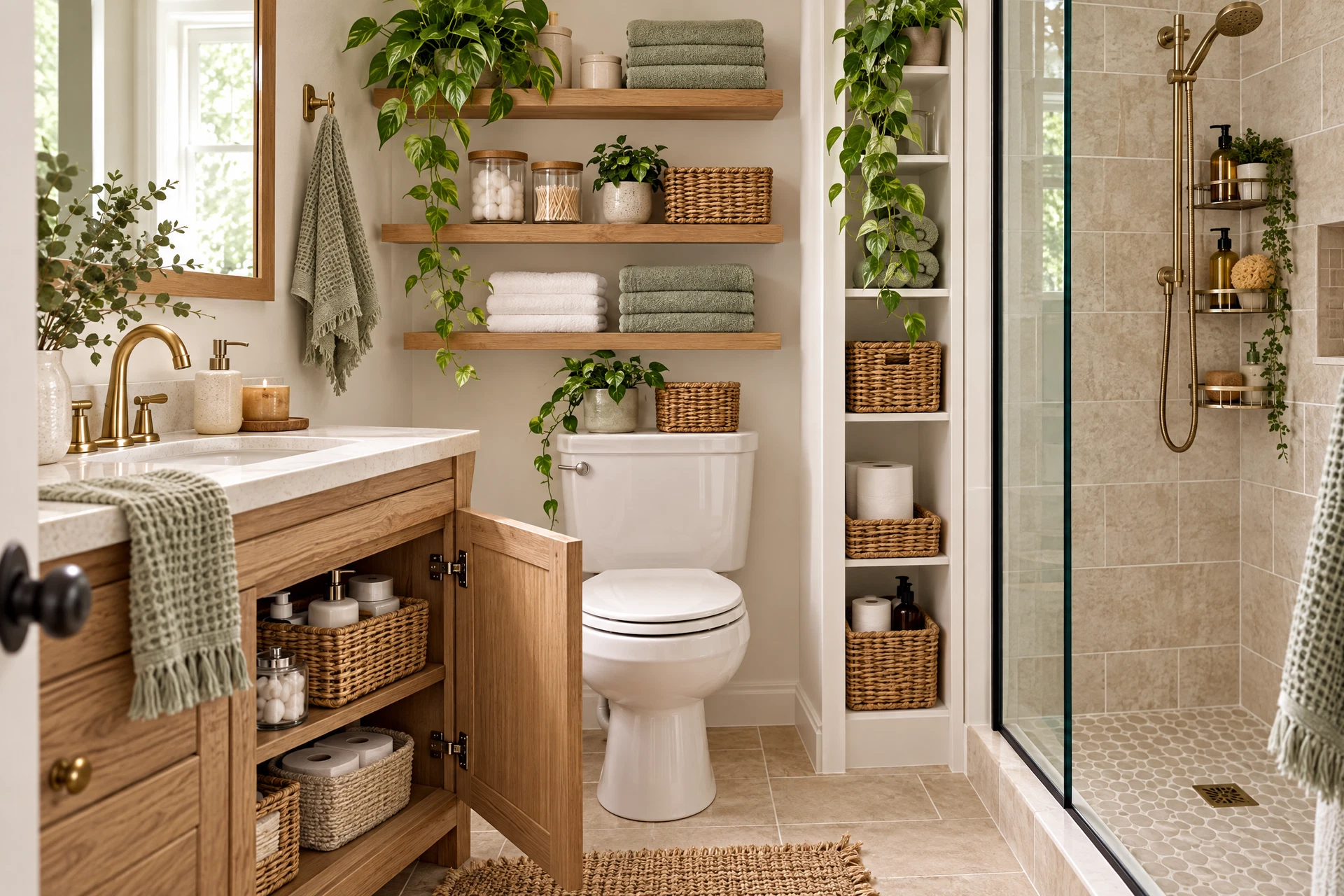
Small bathrooms punish vague organizing advice. A basket that looks perfect in a photograph may block a cabinet hinge. A wooden riser may swell near the sink. A deep under-sink bin may hold a lot but make the thing you use every day harder to reach.
Use the five-part test below for every idea: What floor or wall space does it use? What are the exact measurements? What will it hold? How will humidity and cleaning affect it? Can you reverse it if it stops working? If an idea fails two of those checks, skip it.
Start with cabinet doors
1. Add slim door-back pockets
Measure the clear space between the door and the shelves before choosing an organizer. Door-back pockets are useful for flat items such as brushes, combs, refill pouches, or cleaning cloths. They are a skip when the hinge cannot open fully or the pocket makes the door sag.
2. Use a removable magnetic strip carefully
A magnetic strip can keep small metal tools visible and off the counter. Test the magnet with the actual items first and keep it away from anything that could rust. In a rental, use a freestanding magnetic board or a removable mounting product approved for your surface instead of assuming adhesive is safe.
3. Give the inside door one job
Do not turn the door into a second junk drawer. Choose one category—hair tools, first-aid basics, or daily grooming—and label the boundary with a small tray. The system works because it limits what is allowed to live there.
Use vertical gaps with exact measurements
4. Slide in a narrow rolling cart
Measure the gap at its narrowest point, then subtract room for the cart to move. A cart is a strong option for spare toilet paper, towels, or cleaning supplies when the items can stay dry. Skip it if the wheels catch on the floor or the cart blocks the only route around the toilet.
5. Install a tension shelf only where it can breathe
A tension shelf can use a narrow vertical gap without drilling, but it still needs stable, dry contact points. Keep it away from direct spray and do not overload it. Check the lease and the manufacturer’s instructions, and test the shelf with lightweight contents before trusting it over breakable items.
6. Stack with a riser that can be wiped
Acrylic, coated metal, and sealed plastic are easier to clean than unfinished fiberboard near a sink. Measure the height of the bottles you need below and above the riser. Skip it if the higher tier hides labels or creates a shelf you cannot reach without knocking things over.
Make the under-sink void useful
7. Build zones around the plumbing
Take everything out and photograph the pipes before buying bins. Use a shallow bin on each side for categories that can tolerate the environment, leaving the middle open for the plumbing. Keep cleaners away from children and pets, and do not decant products into unlabelled containers.
8. Choose pull-out bins for daily items
A pull-out bin earns its space when it lets you see the contents without kneeling and reaching to the back. Measure the cabinet opening, not just the interior. Skip a pull-out if the door frame is narrower than the inside or the bin cannot clear the pipes.
9. Keep a dry backup zone elsewhere
Extra toilet paper, paper labels, and spare electronics are better stored outside the dampest part of the room. The goal is not to fit everything under the sink; it is to keep vulnerable supplies in a place where they stay usable.
Organize shower corners without creating grime traps
10. Use a raised, drainable caddy
Choose a caddy with holes, a stable base, and enough clearance to rinse the wall and floor behind it. Keep products upright and reduce duplicates before adding another tier. A caddy is a skip when its feet trap water or its suction cups fail on your tile.
11. Group by routine, not by bottle height
Put the products used in the same routine together: wash, hair, shave, or guest use. This reduces the number of bottles that migrate across the ledge. Keep labels facing outward so you can see what is nearly empty before buying another.
12. Add a washable hook for one towel
One hook near the shower can be more useful than a rack that never dries. Use a product rated for humid areas and follow the installation instructions. If the surface is textured or porous, choose a freestanding solution rather than trusting a removable adhesive.
Use the vanity sides and the space beside it
13. Keep the counter edge clear
A small tray can corral the daily essentials, but it should be easy to lift and wipe underneath. Measure the counter depth and leave enough room to open drawers. Skip the tray if it becomes a permanent pile; a clear surface is already an organizing win.
14. Add a slim side pocket for flat tools
A narrow, wipeable pocket beside the vanity can hold a hairbrush, comb, or styling clips. Make sure it does not catch clothing or reduce the clearance of the bathroom door. Surface-free versions are preferable in rentals, but even removable products need a move-out test.
15. Use one small lidded bin for contained waste
A lidded bin can make a compact bathroom feel calmer, especially when it fits under the vanity. Check that the lid opens fully in place and the liner is easy to remove. Do not hide damp cloths or wet towels inside; moisture needs airflow.
Before you keep any organizer, put the real contents inside it for a week. If you have to move the same item twice to reach what you use every morning, the system is not working yet.
Humidity and cleaning are part of the design
Bathrooms need materials that tolerate splashes, condensation, and regular wiping. Leave a small gap behind containers when possible, let towels dry fully, and avoid turning every vertical surface into storage. An organization idea that adds a hard-to-clean ledge can create more work than it removes.
Conclusion: organize the room you actually have
The best small bathroom organization ideas are not the ones that hold the most. They are the ones that make daily items visible, protect supplies from moisture, preserve safe movement, and stay easy to clean. Measure the awkward spaces, start with the contents, and give yourself permission to skip a clever product when the trade-off is not worth it.