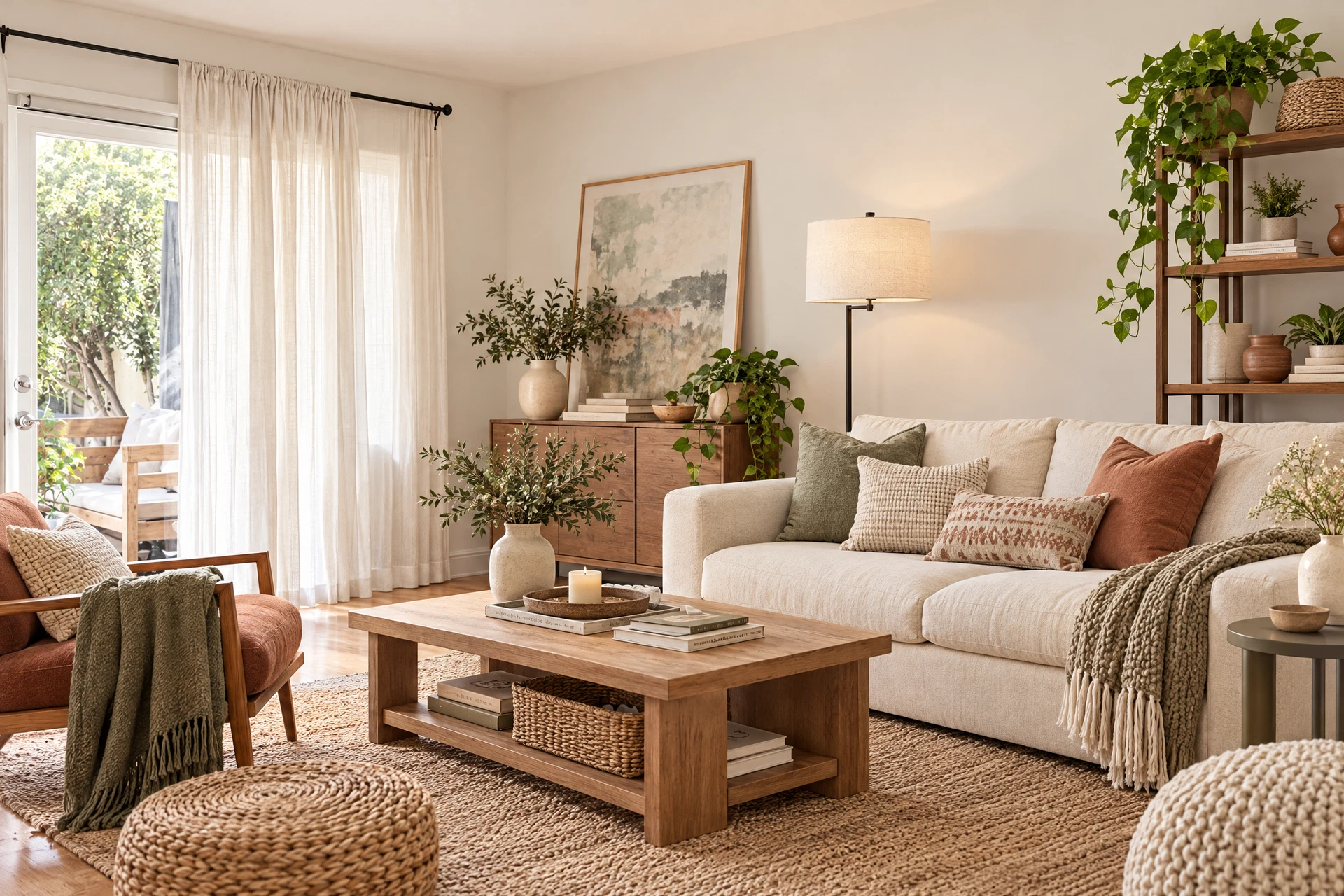
Rental decorating gets easier when “reversible” becomes the first design brief. Instead of asking what can be renovated, ask what can be added, moved, unplugged, folded, or removed without leaving a problem behind.
Every idea in this guide is labeled as surface-free, removable, or permission-dependent. Read the lease, inspect the surface, and test a small area before trusting any product claim. A move-out test at the end will help you decide whether an idea is truly renter-friendly.
Start with light
1. Add a plug-in lamp at the lowest useful height — surface-free
A table lamp, floor lamp, or plug-in sconce can change the room without touching the wiring. Use the outlet locations you already have and route cords along the wall edge with a solution that the manufacturer says is removable from your surface.
2. Swap the shade, not the fixture — surface-free
If the ceiling fitting is safe and permitted, a lighter shade can change the quality of the room without a new installation. Measure the fitting and check the bulb clearance. For more ideas, use the warm-light buying guide to compare bulb warmth, shade materials, and practical placement.
3. Create a lamp corner instead of brightening everything — surface-free
One warm pool near the sofa or reading chair can make a room feel more inviting than a high-output ceiling fixture. Keep the path clear and choose a switch you can reach without moving furniture.
Add softness without permanent changes
4. Layer a washable throw — surface-free
A throw is a low-risk way to add color and texture. Choose a size that can be washed or aired easily and place it where it will actually be used. A decorative textile that constantly slides onto the floor is not earning its keep.
5. Use curtains with a reversible hanging method — permission-dependent
Curtains can soften hard windows and improve the room’s vertical rhythm. First check whether the lease allows drilling. If not, investigate tension or compression options sized for your window and keep the fabric weight within the hardware’s limit. Do not assume an adhesive hook can safely hold a curtain rod.
6. Put a washable layer under the seating zone — surface-free
A rug can visually connect mismatched rental flooring and make furniture feel more intentional. Tape the footprint first. Keep enough clear floor for doors and walking routes, and choose a material that fits your cleaning routine rather than only your color palette.
Create vertical interest safely
7. Lean large art instead of hanging it — surface-free
Lean a framed print on a sturdy console, shelf, or the floor against a wall that is protected from traffic. Secure the frame if children or pets could pull it forward, and keep exits and radiators clear. The effect is tall and personal without a hole.
8. Use a freestanding ladder shelf — surface-free
A slim shelf can make use of vertical space while moving with you. Anchor it according to the manufacturer’s instructions if it could tip. Keep the lowest shelves for heavier items and leave enough empty space that the wall still reads as part of the composition.
9. Hang a textile only with approved hardware — permission-dependent
A textile can add height and softness, but its weight and the wall surface matter. Ask the landlord when required. If the answer is unclear, choose a freestanding display or a textile draped over an existing piece rather than gambling on a patch that will be visible at move-out.
Make storage flexible
10. Choose a closed freestanding cabinet — surface-free
A cabinet can hide visual noise without changing the built-in storage. Measure the route from the door to the final location, then the wall width, door swing, and skirting-board clearance. Look for adjustable shelves only if the weight rating supports the items you plan to store.
11. Use baskets by category, not by room — surface-free
One basket for throws, one for cables, and one for things waiting to be put away is easier to maintain than a basket for every corner. Label only if it helps the household. The best container is the one you can carry with one hand and return without rearranging the room.
12. Add a narrow cart to an awkward gap — surface-free
A rolling cart can create useful storage in a kitchen, bathroom, or entryway without drilling. Measure the gap at its narrowest point and leave turning room. If the cart blocks a route, it is not a storage solution; it is a new obstacle.
Fix the layout before buying more
13. Tape the furniture footprint — surface-free
Use painter’s tape to map the footprint of a new sofa, table, or shelf before it arrives. Walk the route while carrying a basket and opening doors. This simple test is especially valuable in rentals because returns, delivery fees, and disposal are expensive.
14. Let one piece carry the room’s focus — surface-free
Rental rooms often contain a mix of finishes and inherited fixtures. Choose one quiet focal point—a window, a sofa, a large leaning artwork, or a lamp—and let the rest support it. Group smaller objects so the eye has fewer places to stop.
15. Keep a move-out box from day one — surface-free
Save the original hardware, spare keys, appliance parts, and any removable wall product packaging in one labeled box. Photograph the room before you install anything. Future-you will thank present-you when the tenancy ends.
Surface-free touches no wall or fixture. Removable attaches temporarily but still needs a surface and weight check. Permission-dependent changes a wall, fitting, or fixture and should wait for written approval.
Lease and surface cautions
“Damage-free” is not a universal promise. Paint age, humidity, wallpaper, plaster, tile texture, dust, weight, and installation technique all change the result. Read the lease and product instructions, test in an inconspicuous place when allowed, and do not use a wall product to hold something heavier than its rating. Ask before changing lighting, drilling, painting, mounting shelves, or altering a fitting.
The move-out test
Stand in the doorway and take another photo. Remove the item or system exactly as you would on moving day. Look for holes, lifted paint, adhesive residue, pressure marks, faded areas, scuffed floors, and missing hardware. If you would need a patch kit, landlord approval, specialist cleaning, or a long explanation, classify the idea as permission-dependent rather than pretending it is reversible.
Conclusion: design for leaving well
A warmer rental does not need a permanent transformation. It needs layers that improve daily life and can be packed, unplugged, or removed with care. Start with light, add softness, create vertical interest, use freestanding storage, fix the layout, and keep the move-out test close by. Your home can feel like yours without asking the walls to become someone else’s.